
Workflow Automation
Run your own workflow automation server to connect your apps and automate tasks with reduced reliance on third-party platforms.
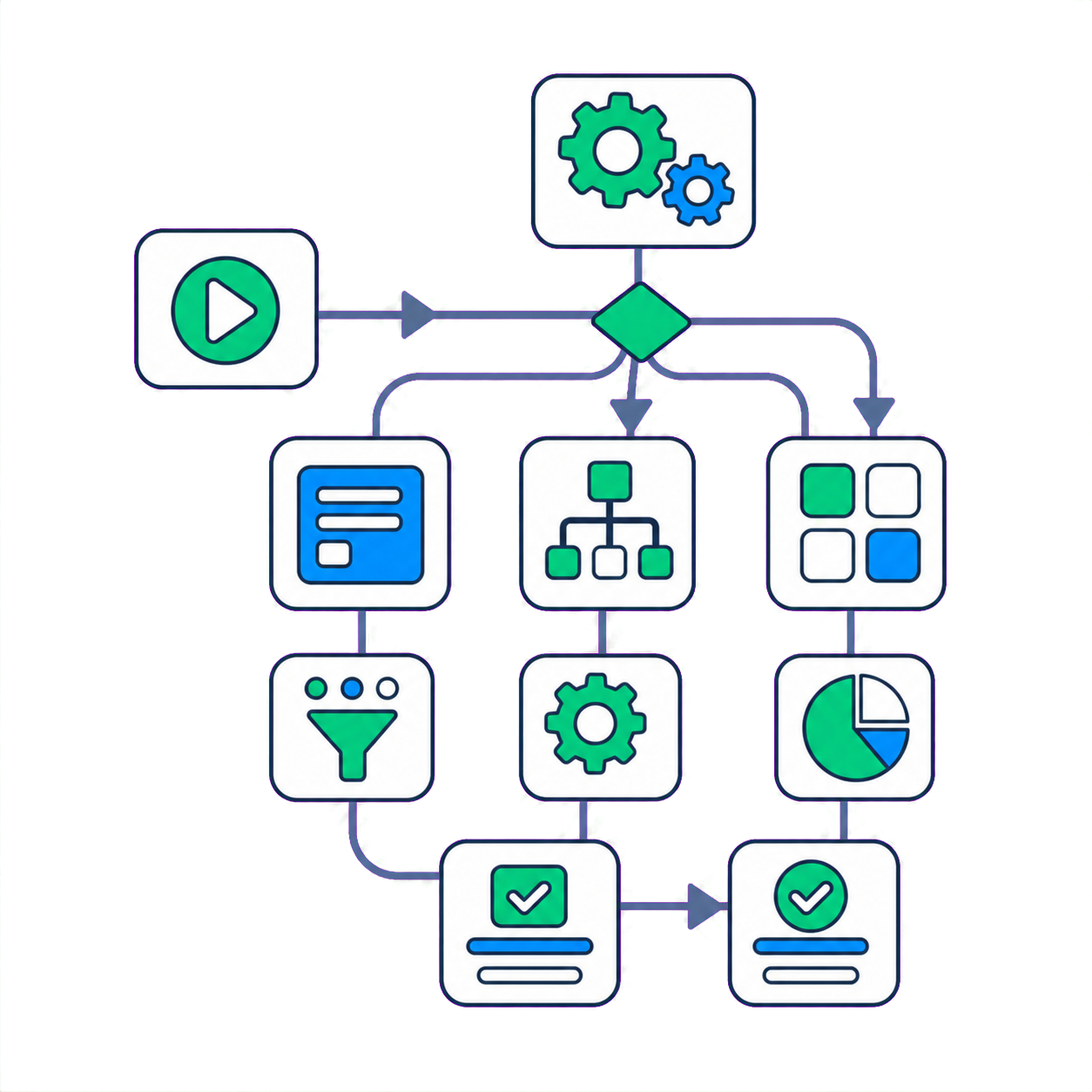
Tired of relying on third-party automation tools?
Tired of relying on public automation platforms that limit your control and route your data through third-party servers? Looking for a more secure, private way to automate your tasks and connect your apps? Our workflow automation service gives you full control over your data, running your workflows on your own server, your way.
Key Benefits of Self-Hosted Workflow Automation
01
Privacy
You have complete control over your data. Your workflows and files remain on your own server, eliminating the need for a third party to ensure their security.
02
Security
You can adjust security settings to suit your specific requirements, which can be especially important for organizations handling sensitive information.
03
Customization
You can tailor the workflow automation platform to fit your unique needs and preferences, including branding, user permissions, and integrations with other tools.
04
Cost
Running your own automation server can be more cost-effective over time, especially for larger organizations with many users.
05
Compliance
Self-hosting can be especially useful for industries with strict data regulations, since it ensures your workflows stay compliant.
Why Choose Us for Your Workflow Automation Setup?
- Expertise in secure, self-hosted automation solutions is essential for guaranteeing the reliability and integrity of your workflows.
- Fast turnaround times and flexible pricing options are crucial features.
- Ongoing support and maintenance are crucial for the sustained success of any endeavor.

Frequently Asked Questions
Common questions about connecting systems and automating repeatable business processes.
Which systems can be connected?
It depends on the applications involved and the integrations they provide. APIs, webhooks, database access, and supported connectors can be used to link systems as part of the workflow design.
Can a workflow require human approval?
Yes. Approval steps can be designed into appropriate workflows so important actions remain under human control instead of running automatically from end to end.
Can we automate one process first?
Yes. Starting with one clearly defined, repetitive process is often the most practical way to validate the workflow, measure the result, and decide what to automate next.
What happens if an automated step fails?
Failure handling is considered during workflow design. Depending on the platform and process, this can include logging, notifications, retries, fallback paths, or a manual review step.
Have a project in mind?
Tell us what you want to build. We’ll help you choose a clear, practical next step.